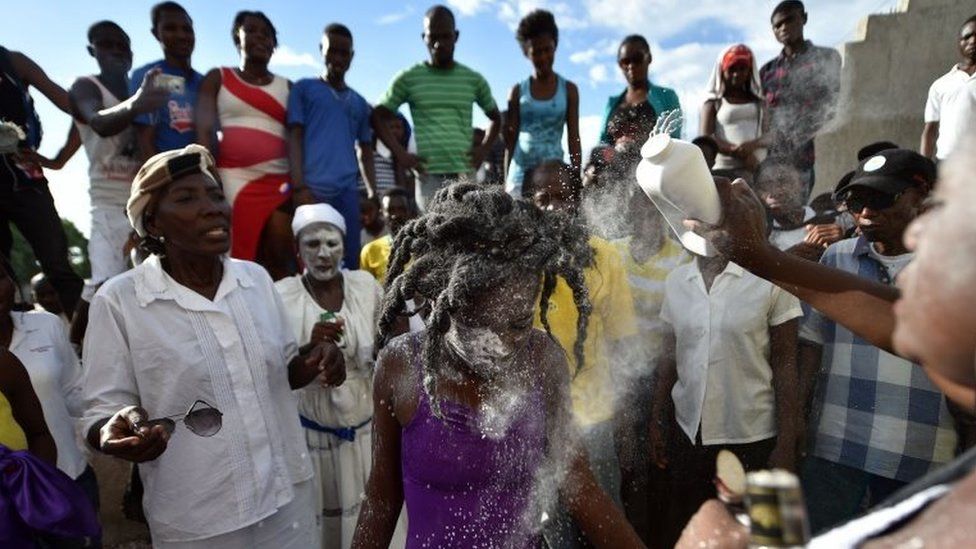
Despite past societal rejection, Vodun, also known as Voodoo, is gaining traction as a legitimate and powerful faith in Haiti. Recently, the practice has seen a surge in popularity. It’s believed to offer solace and protection amidst the security challenges facing the Caribbean nation.
Recent gatherings of Voodoo practitioners, such as the one honoring St. George, reflect this growing trend. As one participant passionately declared, “We don’t care if they hate us, because they can’t bury us.”
The religion is gaining acceptance across Haiti as people seek refuge from the violence perpetrated by gangs. Cecil Elien Isac, a fourth-generation oungan, noted the surge in temple membership, saying, “When I opened my temple years ago, about eight families joined. Now I count more than 4,000, both in Haiti and abroad.”
Beyond its spiritual significance, the cult plays a significant role in Haiti’s cultural scene, inspiring various art forms. As the saying goes, “Haiti is 70% Catholic, 30% Protestant, and 100% Vodou.”

In these uncertain times, it offers a sense of resilience and community to its followers. “This surge in Vodou’s relevance underscores its deep roots in Haiti’s history and its evolving role in contemporary society,” an observer noted.
Voodoo was at the root of the revolution that led Haiti to become the world’s first free Black Republic. This religion was born in West Africa and brought across the Atlantic by slaves. Today, it is still proudly practiced on the continent despite the proliferation of churches. Benin Republic is one of the West African nations that holds on tightly to it.
Will Vodou’s practices really save its believers from the harm of the gangs?