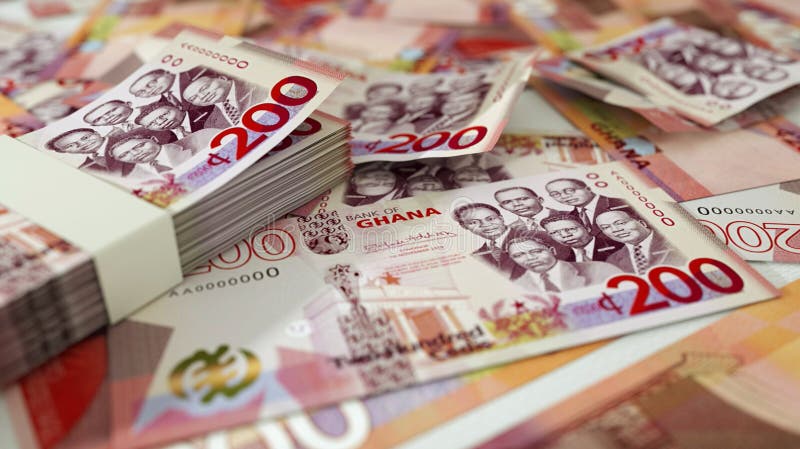
The Ghana Cedi has reached an unprecedented low against the US Dollar, causing significant ripples throughout the nation’s economy. As the currency continues its downward spiral, everyday Ghanaians are feeling the squeeze, facing rising costs of living and economic uncertainty.
Rising Costs of Living
The Cedi, which traded at 13.45 on April 19, 2024, has now reached 14.23 as of Sunday, May 19, 2024. This represents a 14% decline this year alone, a slump beaten only by currencies that have been devalued, including the Egyptian pound and Nigerian naira.
For many families, the weakening Cedi means escalating prices for essential goods, particularly those that are imported. Basic commodities such as rice, cooking oil, and fuel have seen sharp price increases, making it increasingly difficult for households to make ends meet.
Mary Tetteh, a mother of three in Accra, shares her struggles: “Every week, the prices at the market go up. It’s becoming harder to afford the same amount of food we used to buy.”
Beyond the financial metrics, the human toll of the Cedi’s decline is palpable. The currency hasn’t gained versus the dollar in the past 22 trading sessions, the longest streak according to data compiled by Bloomberg going back to 1994. Many Ghanaians are facing increased financial stress, with some having to take on multiple jobs or cut back on essential expenses to cope.
Ghana Cedi in decline: Impact on Small Businesses
Small business owners are also bearing the brunt of the Cedi’s decline. Seidu Abubacar, who runs a small electronics shop, explains how his costs have surged: “Most of my products are imported, and with the Cedi falling, I have to pay more to get the same items. I can’t keep raising prices without losing customers.”
Political Ramifications
President Nana Akuffo Addo, who promised a 1 Cedi to 1 Dollar exchange rate during his 2012 campaign, is now facing growing anger from Ghanaians.
The Vice President, Dr. Mahamudu Bawumia, who is vying for the presidency in the upcoming December election, has much to contend with. Dr. Bawumia was a vocal critic of the previous administration, highlighting in 2014 that “if the fundamentals are weak, the exchange rate will expose you.” At that time, the Cedi was trading around 4 to the Dollar.
Economic Responses and Challenges
The government has introduced several measures to curb the Cedi’s decline, including tightening monetary policy and seeking financial support from international organizations. It also suggests using the country’s natural resources to back the currency. However, these efforts have so far yielded limited success, and many Ghanaians remain skeptical about the effectiveness of these interventions.
Professor Lord Mensah, an Economist at the University of Ghana, Legon, stated: “With or without the Gold for Oil policy, we will still be having the Cedi depreciation. We need to ask ourselves what is the component of the exchange rate demand when it comes to oil and then neutralizing it with gold. And again, gold price on the global market is stable, that is what we need to appreciate. So, respectively, we were trying to use natural resources to control the dollar but its impact I can tell you is very minimal.”
Looking Ahead
The road to recovery for the Ghanaian Cedi is fraught with challenges. But experts believe that with strategic planning and robust policy implementation, there is hope for stabilization. Will this be possible under the ruling party’s administration? Ghanaians will decide on December 7, 2024.