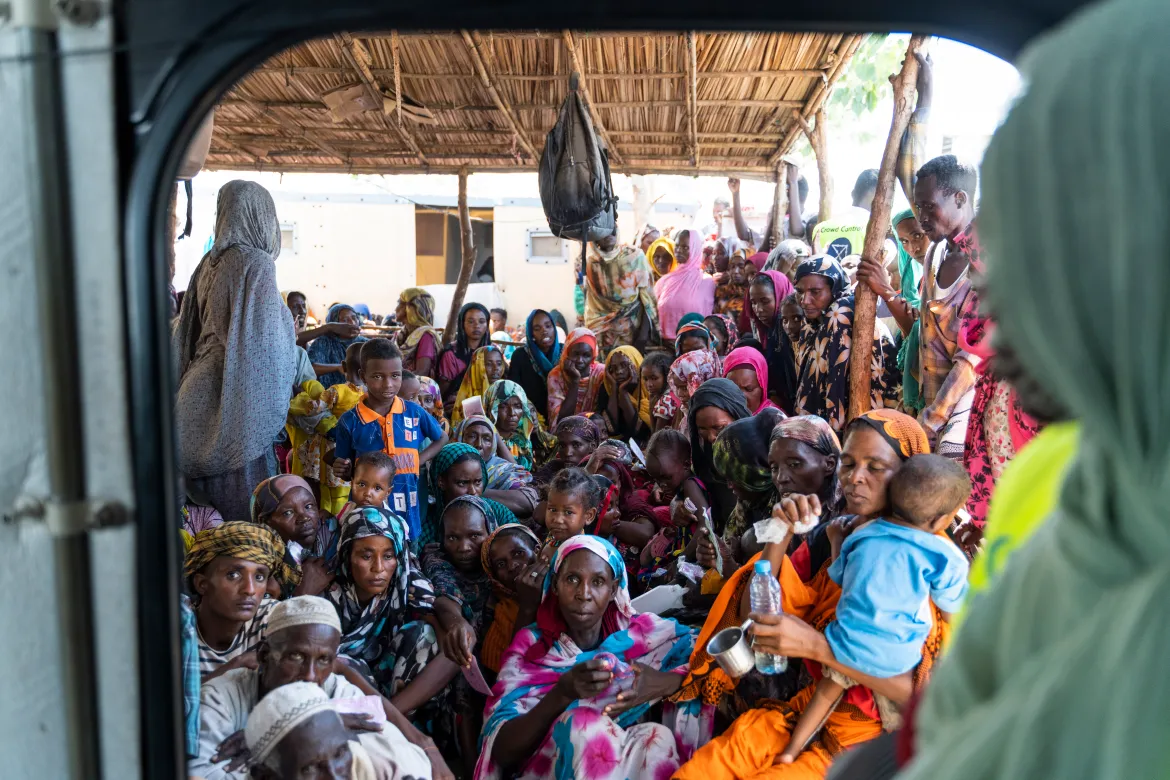
Today marks a year since Sudan has been enduring violence, displacement, and violations since the start of the war. More than 8.6 million people, predominantly women and children, have fled their homes since April 15, 2023, making it one of the world’s largest displacement crises.
Indiscriminate attacks, including widespread sexual violence, have plagued civilians, leaving families torn apart and communities shattered. The conflict has upended the lives of youth, leaving them uncertain about the future, and has decimated Sudan’s urban middle class, with professionals like architects, doctors, and teachers losing everything.
Photographer Ala Kheir, collaborating with the UNHCR, has documented the conflict and its impact on lives uprooted, drawing parallels to the atrocities witnessed during the 2003-2020 war in Darfur. He hopes his photos will raise awareness and prompt action to aid Sudanese refugees stranded in camps, schools, and farms.
Kheir states, “Through my photos, I hope that people at least engage with what’s going on. Those people who I photographed, I think if I can transfer their feelings across, I would at least have done something so that people elsewhere start to think about helping the Sudanese who are stranded in camps, schools, farms. Maybe, in the middle of all of this chaos and carnage, the parties to the conflict inside Sudan and abroad can start to think about solutions and interventions to help end this devastating war.”

Thousands of refugees continue to cross borders daily, with South Sudan receiving over 1,800 people daily, adding pressure to already stretched resources. Chad is grappling with the largest refugee influx in its history.
Other countries hosting Sudanese refugees include the Central African Republic, Egypt, Ethiopia, and Uganda, with host countries generously providing access to public services such as education, healthcare, and housing.
AfrikPage