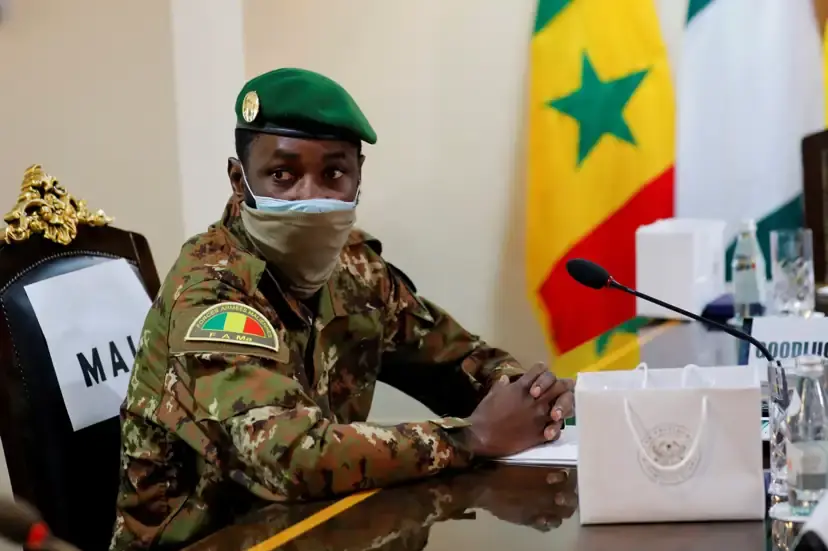
The transitional government in Mali faces criticism following its decision to suspend all political party activities in the country and forbid media coverage of such events.
On Wednesday, April 10, 2024, the colonels who overthrew President Ibrahim Boubacar Keïta in 2020 decreed the suspension “until further notice” of political party and association activities in order to maintain “public order” during this transitional period.
Following suit, the High Authority for Communication (HAC) aligned with Colonel Assimi Goïta, signing the decree aimed at political parties.
In a statement, the HAC “urges all media (radio, television, print, and online newspapers) to cease all broadcasting and publication of political party activities and activities of a political nature by associations.”
Expressing “deep concern”, the UN High Commissioner for Human Rights insisted that the decree “must be immediately repealed,” conveyed via the social network X.
The spokesperson for the US State Department, Matthew Miller, also condemned the decision on Thursday, emphasizing the importance of holding elections: “Freedom of expression and freedom of association are essential to an open society,” he asserted during a press briefing.
Mali, a West African nation with over 24 million inhabitants, has been grappling with terrorist insecurity crises for over a decade. President Keita’s failure to resolve the crisis led to a military takeover, resulting in the suspension of military agreements with France and the UN. Subsequently, Mali has sought closer military relationships with Russia. The military leadership faced criticism from the international community, with pressure from the West African bloc, ECOWAS, prompting their withdrawal from the organization.
As of now, the date for elections in the country remains uncertain.